Tuesday, May 14, 2013

HAIR (1979)


Colour, 1979, 121 m. / Directed by Milos Forman / Screenplay by Michael Weller / Music by Galt MacDermot, Lyrics by Gerome Ragni & James Rado / Starring Treat Williams, John Savage, Beverly D’Angelo, Annie Golden, Dorsey Wright, Don Dacus, Cheryl Barnes 
(United Artists)

originally published November 14, 2007

Hair (subtitled The American Tribal Love-Rock Musical) made its auspicious debut as the inaugural show for the opening of Joseph Papp’s Public Theatre in New York City in 1967. With additional retooling (including a substantial number of new songs), the show opened on Broadway in April of 1968, where it ran for 1,750 performances before finally closing on July 1, 1972. Among its original cast (the “Tribe”) were the show’s authors and co-lyricists Rado and Ragni, as well as future stars Melba Moore and Diane Keaton. 

1968 was a year dominated by very strong musicals, including Sherman Edwards’ 1776, Kander and Ebb’s Zorba, and the Burt Bacharach and Hal David's Promises, Promises, a musical version of Billy Wilder's The ApartmentHair received only two Tony nominations, for Best Musical and Best Director (for Tom O’Horgan), and it lost both to 1776, although composer Galt MacDermot won a Drama Desk Award for his score.

Hair broke with tradition in ways beyond its musical and thematic elements, which included heavy influences of everything from folk music to country. The musical marked the first time elements of the contemporary counter-cultural movements were given a mainstream airing in a venue geared primarily at those adults who felt excluded from it, and proved eye-opening to many who became fervent supporters of the show. Hair toured extensively for years and had long-running companies in Los Angeles, Chicago, and other cities across the United States while still in its initial Broadway run. Successful mountings of the show soon followed in the United Kingdom (the London run of two years ended only because the roof of its theatre collapsed), Germany and Australia. A Mexican production was shut down after one performance by authorities because of on-stage nudity.

Famously, the musical generated significant controversy because of its first act “Love-In” closer, which saw most of the cast fully nude (participation was optional) as the curtain came down. The musical also included a fully integrated cast, and was peppered with liberal attitudes towards sex and drugs in a way even the most frank dramas had usually skirted.

An unfortunate side effect of the runaway success of Hair, due in good part to the many critics who labeled the show “fresh” and “innovative,” was a plethora of sub-standard “rock” musicals which would occasionally plague Broadway throughout the 1970s. This movement was encouraged further by the success of Jesus Christ Superstar, and no one seemed to realize that both Galt MacDermot and Andrew Lloyd Webber were both highly trained professional composers, not rock musicians. One actual rock opera written during the period, The Who's Tommy, wouldn't make it to Broadway until the 1990s, and then in a substantially compromised form.

The genre ultimately reached its nadir at the hands of 1976’s Rockabye Hamlet, the very title of which renders any discussion thereof completely superfluous.

Of course, the creators of Hair were inevitably expected to make lightning strike twice.  MacDermot fared well with his first follow-up, teaming with John Guare as lyricist for the successful re-interpretation of Shakespeare’s Comedy of Errors, Two Gentlemen of Verona(1971). Any good will earned there was wiped out with the sci-fi disaster Via Galactica (1972) (with Christopher Gore as lyricist), which made the unintentionally hilarious move of replacing much of the stage floor with trampolines to “simulate” zero gravity, leaving its actors flailing around haplessly while trying to act out a storyline so convoluted and redolent with symbolism there’s no point in even attempting to relate it here. According to theatre historian Ken Mandelbaum, the show was originally to be entitled Up!, but the title was changed when it was realized that the marquee of the Uris theatre where it was playing would read “Up! Uris.”  Via Galactica ran for 7 performances.

MacDermot re-teamed with Hair’s Ragni for his next effort, the interesting if equally-doomed Dude (also 1972), which managed to run for 16 performances, and whose major contribution to theatre history seems to be that its destruction of the stage area of the Broadway Theatre for its “environmental” staging, clumping the audience haphazardly about a number of smaller stages, made way for Harold Prince’s acclaimed low-brow revival of Leonard Bernstein’s Candide. MacDermot’s sole score for the theatre after Dude was his short-lived but brilliant adaptation (with librettist William Dumaresq) of Saroyan’s The Human Comedy(1984), a true American opera that will hopefully someday see a much-needed revival. 

The story of Hair was loosely centered on the members of “The Tribe”:  Claude, the leader of the group, Berger, Claude’s best friend, and their mutual love interest, Sheila, a political activist and NYU film student. Other complications arose with the Jeanie, in love with Claude but pregnant by another man, Woof, an admitted bisexual, and Hud, a member of the Black Panthers. In the end, Claude fails to burn his draft card, and is drafted and goes off to fight in Vietnam, where he is killed. But the plot was nearly an afterthought, as much of the evening of Hair was musical, with songs overlapping and most often spilling into one another without pause. Indeed, as multiple productions opened they included many revisions, and the Broadway production itself was never “locked” (the point at which a show undergoes no further revisions). To avoid any confusion, and leaving out the many songs which were later inserted into the show, I have listed only the songs which were included in Hair for its Broadway premiere.

Song Listing

Aquarius
Donna
Hashish
Sodomy
Colored Spade
Manchester
Ain't Got No
I Believe In Love
Air
Initials
I Got Life
Going Down
Hair
My Conviction*
Easy To Be Hard
Don't Put It Down
Frank Mills
Be-In
Where Do I Go
Electric Blues
Black Boys
White Boys
Walking in Space
Abie Baby*
Three-Five-Zero-Zero
What A Piece Of Work Is Man
Good Morning Starshine
The Bed
The Flesh Failures (Let The Sun Shine In)

BLUE indicates Broadway songs removed for the film version; RED indicates songs altered considerably from their original form; GREEN indicates songs added specifically for the film version.

*These songs were recorded for the film, and are extant on the soundtrack recording.  There is every indication that these numbers were also filmed, but have never been seen or issued as deleted scenes on any release of the film.

Michael Weller’s screenplay for the film keeps the character names, but otherwise substantially rewrites the entire plot of Hair, with the musical numbers rearranged as required (although it still opens with “Aquarius” and closes with “The Flesh Failures (Let The Sun Shine In)”) For the film, Claude (Savage) is an Oklahoma farm boy who travels to New York for a last day of freedom before enlisting in the Army.  In the Park he meets Berger (Williams) and the other members of the Tribe (although they are never referred to as such in the film):  Woof (Dacus, of the band Chicago), Jeanie (Golden) and Hud (Wright).  Claude sees wealthy debutante Sheila (D’Angelo) riding in Central Park, and becomes infatuated with her, and Berger makes it his goal to unite the couple before Claude’s fated date with the Army.  After a disastrous attempt at crashing Sheila’s debut results in the gang being thrown in jail, everyone ends up reconnecting at a love-in in the Park.  Claude and Sheila fumble their initial attempts at getting together, but Sheila nonetheless agrees to go with Berger and the gang to visit Claude during his army training in Arizona.  Further complications arise with the sudden appearance of Hud’s estranged wife (Barnes) and child.  

Rather than introducing the weight of the Vietnam conflict in the musical’s closing moments, the film plays its hand openly, with storm clouds visible in its opening scenes of Claude’s awkward farewell to his father – unlike the Claude of the stage play (really more akin to how Berger is presented in the film), this Claude is not only constantly aware that he is going to war, he seems determined to do so.  

Hair firmly establishes its unique tone with its opening number, “Aquarius,” especially in its approach to incorporating dance and movement into the story.  Modern dance pioneer Twyla Tharp was brought in, along with her dance troupe, to stage the film’s choreography, which introduced a fluid and organic feel to the numbers (with the exception of the Army sequences) quite unlike the precise and controlled movements most audiences would associate with dance.  Here Forman also introduces a pattern he will repeat throughout the film at key moments – the singer (Ren Woods) passionately extolling the song, with cutaways to Tharp’s dancers.  The singer and the dancers are never seen in the same shot, and it is implied they are in two completely separate environments.  Forman returns to this filmic juxtaposition for several of the songs, using the music to link two separate locations and/or time periods.  In “White Boys / Black Boys,” this is used to comic effect, as he cuts back and forth between the girls singing the song (including Nell Carter and Charlayne Woodard from Broadway’s then-running Ain’t Misbehavin’ and Broadway stalwart Laurie Beechman) and the U.S. Army draft board officers as they examine incoming recruits.  For the title number, the song is simultaneously performed by Berger as he walks the streets of New York and the gang in prison for crashing Sheila’s party.  This lends the musical moments an unexpected dynamic quality, and it is not accidental that this tying together of separate elements plays powerfully into the film’s final scene.

Helping the film immensely in keeping its buoyant energy flowing is its talented core cast.  Treat Williams is thoroughly engaging as Berger, and his puppy-dog playfulness makes his character’s persistent concern with Claude’s happiness so natural that it makes it impossible to imagine anyone else in the role.  Savage keeps his character completely likeable in the difficult role of Claude, as he’s forced, with very little dialogue, to convey a wide range of conflicts, including his infatuation with Sheila and his determination to join the Army.  The movie is all the richer for the presence of D’Angelo; though she gets only one semi-solo (the infectious “Good Morning Starshine”), it’s always a joy watching her onscreen.  Golden (who’s since gone on to Broadway, most notably in Sondheim’s darkly comic Assassins), Wright and Dacus all make strong contributions, effectively conveying the natural camaraderie of this group of misfits, and Barnes is heart-breaking in her solo delivery of “Easy To Be Hard.”

For audiences in 1979, Hair seemed a somewhat dubious choice of projects for director Milos Forman.  It was his follow-up to the universally acclaimed adaptation of Ken Kesey’s One Flew Over The Cuckoo’s Nest, which had not only earned Forman an Academy Award for best director, but had also swept the Best Picture, Best Actor (Jack Nicholson), Best Actress (Louise Fletcher) and Best Adapted Screenplay (Laurence Hauben and Bo Goldman) Oscars as well (a feat managed only by 1934’s It Happened One Night and 1992’s Silence of the Lambs).  Even critics who admired Hair were puzzled at Forman’s motives for bringing the “hippie musical” to the screen, which most had come to regard as hopelessly dated in the stretch of time between its 1968 premiere on Broadway and the movie screens of 1979, which, with the exception of the previous year’s Grease, were proving more and more resistant to musicals.

The general air of befuddlement which surrounded Hair upon its release seems odd in retrospect, especially the refusal of the film’s contemporaries to place Hair into its proper political context.  Hair re-emerged at the time when American filmmakers and audiences were finally willing to come to terms with the fallout of the failed Vietnam conflict.  While movies likeThe Deer Hunter and Coming Home (both 1978) were taking a sober look at the effects of the conflict on those who fought and those who stayed behind, Hair examined Vietnam’s damaging effects on the nation’s youth and culture.

Although Hair is very funny and irreverent and full of moments of real musical exuberance, it is most certainly not the happy “flower people” movie that many first-time viewers expect; what makes the film truly resonate is its unflinching view of the consequences of living the so-called “hippie” life.  Berger chooses to live on the streets with his friends, but he does have a home and parents who are ready and willing to wash his dirty jeans and make him a sandwich “with lots of mayonnaise” when he stops by to ask for money.  Hud is enjoying hanging out and pondering his possible fatherhood of Jeanie’s baby, but he is horrified when his wife and young son manage to track him down and address him as “Lafayette,” his abandoned identity.  All of these pointed moments reinforce the feeling that the weight of the world is hovering just over the characters’ shoulders.  The film’s final scenes underline the sober point – that a war will inevitably affect more than just those who fight in it.

As an aside, the 12-year gestation period for bringing Hair to the screen was hardly record-breaking.  21 years passed between the 1947 opening of Finian’s Rainbow on Broadway and Francis Ford Coppola’s oddly-ossified 1968 film version, and this year’s release of Tim Burton’s take on Sondheim’s Sweeney Todd, The Demon Barber Of Fleet Street marks the 28-year mark since its 1979 premiere.  The all time record for bringing a show from stage to screen might belong to Michael Ritchie’s ill-advised and charmless adaptation of The Fantasticks, which brought the show to a completely disinterested audience a full 35 years after it began its legendarily long run off-Broadway.

THE WIZ (1978)


Originally published September 27, 2007

Colour, 1978, 135m. / Directed by Sidney Lumet / Screenplay by Joel Schumacher / Music and Lyrics by Charlie Smalls (and others) / Starring Diana Ross, Michael Jackson, Nipsey Russell, Ted Ross, Mabel King, Theresa Merritt, Thelma Carpenter, Lena Horne (Motown / Universal Pictures)

Updated May 14, 2013

Writer L. Frank Baum could hardly have known what he was unleashing upon the world with the publication of his children’s book The Wonderful Wizard of Oz in 1900, but even during the author’s lifetime he saw the book (along with its thirteen sequels) become a bona fide classic. He oversaw the first stage adaptation of the novel, which led to a successful 1904 run on Broadway as well as an extensive tour of the country. This first stage production marked the first time the title was shortened to The Wizard of Oz. Baum died in 1919, so alas he did not see the now-legendary Technicolor MGM musical film adaptation of 1939, which famously starred Judy Garland as his heroine, Dorothy Gale, along with Ray Bolger, Jack Haley, Bert Lahr, Margaret Hamilton, Frank Morgan, and Billie Burke.

The plot of The Wizard of Oz is by now so ingrained into popular culture that it hardly bears repeating, but here goes:  little Kansas farm girl Dorothy, along with her dog Toto, are whisked away to the magical land of Oz by a renegade cyclone. When the tornado inadvertently drops their farmhouse onto an evil witch, Dorothy and Toto must travel to the center of Oz (wearing the late witch’s enchanted silver slippers) to seek a way home from the all-powerful Wizard of Oz, based in the Emerald City. Along the way, Dorothy recruits an unlikely band of heroes:  a scarecrow in search of a brain, a tin man in search of a heart, and a lion in search of courage. Though the Wizard is revealed to be a charlatan, Dorothy eventually defeats the wicked witch, her companions realize they possessed their “missing” qualities all along, and Dorothy uses her magical shoes to wish herself home to Kansas again.

Broadway in the 1970s was in the midst of a massive identity crisis, with producers in search of new audiences to battle rising production costs for mounting new shows and keeping them running. The changing face of feature films of the time were bringing a realism and verisimilitude (a side effect of the collapsing studio system) the theatre was struggling to emulate. As a side note, bear in mind that the top ticket price to a show like A Chorus Line in 1975 was about $30.

In the wake of the success of Hair came a wave of “rock” musicals (most best forgotten) and other counter-cultural appeals to younger audiences. Even the creators of Hair couldn't recapture that lightning, and the movement soon collapsed.

When Pearl Bailey took over the lead in Jerry Herman’s long-running smash Hello, Dolly!, the entire show was recast to feature African American actors, and the surge in box office receipts did not go unnoticed. This led to an all-black revival of Guys and Dolls, a brazen attempt to hold onto this new-found audience. New musicals like Purlie (1971) and Raisin (a musical version of A Raisin in the Sun) (1974) proved that there was no need to restrict such productions to mere revivals, and introduced vital and vibrant new energy into the musical theatre idiom – changes that proved far more lasting and influencial than any of the elements of the “rock” musicals.

In 1975, following upon these successes, came The Wiz, a fairly faithful retelling of the Baum classic, with a book by William F. Brown and music and lyrics by Charlie Small. The show was an instant hit, making a star of its Dorothy, 15 year-old Stephanie Mills, whose powerhouse voice made the score and cast album a best-seller. The cast included Hinton Battle (as the Scarecrow), Tiger Haynes (as the Tin Man), Ted Ross (as the Lion), Dee Dee Bridgewater (as Glinda, the good witch), AndrĂ© De Shields (as the Wizard) and Mabel King (as Evilene, the wicked witch).  

Due to legal concerns (MGM, and, subsequently, Warner Bros., remain eternally vigilant over any trespass to the 1939 classic), The Wiz made a point of returning to the nomenclature of Baum’s original book in many ways, restoring Glinda as the good witch of the south rather than the north, and returning the magical slippers to their original silver hue rather than the expected Technicolor ruby red. Interestingly, when the Walt Disney Company (which controlled the rights to the sequel novels until they entered the public domain in 1986) made its own Oz movie, the bizarre but faithful Return to Oz (1985), despite remaining quite faithful to the tone of the books, when Dorothy’s slippers turn up they are indeed the same ruby-colored shoes Garland wore.

The Wiz ran for four years and toured extensively, finally closing in 1979 after running 1,672 performances. The show also made a nice sweep at the Tony Awards, as well, winning best musical (over ShenandoahThe Lieutenant and Jerry Herman’s incandescent flop Mack & Mabel). Awards also went to Best Original Score (Charlie Smalls), Best Featured Actor in a Musical (Ted Ross), Best Featured Actress in a Musical (Dee Dee Bridgewater), Best Choreographer (George Faison), and awards for Best Costume Design and Best Direction of a Musical to Geoffrey Holder (best known for his acting in Annie and the James Bond film Live and Let Die, as well as a series of 7-Up commercials in the early 1980s).

Song Listing:

The Feeling We Once Had / The Feeling That We Have
Can I Go On?1
Tornado Ballet
He’s The Wizard
Soon As I Get Home2
You Can’t Win3
I Was Born On The Day Before Yesterday
Ease On Down The Road
Slide Some Oil To Me
Mean Ole Lion
Kalidah Battle
Poppy Girls
Be A Lion
Lion’s Dream
Emerald City Ballet (Psst)4
Emerald City Sequence5
So You Wanted To Meet The Wizard6
To Be Able To Feel (What Would I Do If I Could Feel)
Is This What Feeling Gets?1
No Bad News
Funky Monkeys
Everybody Rejoice7
Who Do You Think You Are?
Believe In Yourself8
Y’all Got It!
A Rested Body Is A Rested Mind
Believe In Yourself (Reprise)
Home

1 Music & Lyrics by Quincy Jones, Nickolas Ashford & Valerie Simpson
2 For the film, the lyrics have been extensively rewritten
3 Written for the stage version, but omitted
4 Music by Timothy Graphenreed & George Faison
5 Music by Quincy Jones, Lyrics by Charlie Smalls
6 For the film, only the “fanfare” of this remains
7 Music & Lyrics by Luther Vandross
8 Sung by The Wiz in the stage version, Dorothy in the film
BLUE indicates Broadway songs removed for the film version; RED indicates songs altered considerably from their original form; GREEN indicates songs added specifically for the film version.

The film version of The Wiz went into production at a perilous time for movie musicals.  The last overwhelmingly critically and financially successful musical film had been Cabaret (1972).  Bob Fosse’s ruthless examination of “divine decadence” was definitely not in the same category as a property that was inescapably a fantasy, a genre that was only just beginning to see newfound respectability with the unexpected phenomenon of Star Wars (1977). 

What made The Wiz seem like a sure thing was the property itself, which had already spawned recognizable hits with the songs “Ease On Down The Road” and “Home,” and a respectable name in its Dorothy, Stephanie Mills. Motown Records became involved with the film, hoping it would be the crown jewel of its new film division, Motown Productions. Motown’s chairman Quincy Jones would serve as producer of the film’s soundtrack, and, along with Ashford & Simpson, would compose new songs for the film in conjunction with the show’s original composer/lyricist Smalls. On The Wiz, Jones would work with Michael Jackson for the first time, a partnership which would lead to three multi-platinum albums and launch the singer’s meteoric solo career. The screenwriter of the sleeper hit musical Sparkle (1976), former window-dresser and future director Joel Schumacher, was tapped to write the screenplay adaptation.

Most highly anticipated was the film debut of Mills, the show’s breakout star, who had managed to get a rhythm and blues career going in the wake of her stage success, and who was still a fresh-faced 19 years old. With her stage co-stars Ted Ross and Mabel King also reprising their roles, Mills would also be supported by Michael Jackson (making his on-screen debut) and veteran Nipsey Russell, with comedian superstar Richard Pryor taking on the role of The Wiz himself.

Obviously, Mills did not get to star in the film. 

Once recording star and erstwhile actress Diana Ross became aware of the film, (to make a very long story short) she maneuvered her way into having Mills ousted and took over the role of Dorothy (at the age of 33). This required a major retooling of the entire project, and provides the major reason why The Wiz is widely regarded as a disappointing film adaptation.

Brown’s book for the stage version of The Wiz was for the most part a straightforward adaptation of Baum’s novel, with, as the titles of the songs would indicate, a peppering of modern humor adding a fresh comic take on the tale; Mills portrayed Dorothy as the same Kansas farm girl experiencing a wondrous journey, meeting strange new friends, and finally returning home to her loving Aunt Em at the final curtain. Motown Productions made the dubious move of dispensing with Brown’s book in its entirety. There’s no way to know whether the film’s central conceit – re-imagining Dorothy’s journey as that of a Harlem-raised girl whisked away by a snowstorm (!) to an Oz that is a stylized version of Manhattan Island – would have worked any more successfully with an actual teenager as the lead, but one suspects the emotional journey would at least have been comparable.

Like Godspell (1973), The Wiz makes extensive use of its New York City locations as a setting for the action of the film, essentially turning the city into a playground for its colorful characters.  But The Wiz had two things going for it that Godspell did not:  a massive Hollywood budget and an A-list Hollywood director.

Sidney Lumet was and remains a well-respected director, known widely for eliciting complex and electric performances from his actors, but comedy eludes him almost entirely (arguably barring the caustic, screaming satire of Network). Star vehicles and big budgets were no stranger to him, and he had guided films such as Murder on the Orient ExpressDog Day Afternoon and Serpico to multiple Academy Award nominations.  But while his deft touch proved exceedingly successful with taut dramas and suspense, Lumet had no experience with light comedy, much less the handling of a musical. Perhaps it was thought he would be able to bolster the notoriously reedy Ross’s performance, or maybe he was hired to secure the talents of Lena Horne as Glinda (Horne was Lumet’s mother-in-law at the time of filming).  Lumet’s comedic ineptitude would later be employed to flatten another Broadway juggernaut, Ira Levin’s long-running and darkly funny (at least on stage) Deathtrap (1982).

Produced at a then-extravagant budget of $24 million (this is without including the massive advertising campaign for the film), The Wiz drew much critical fire (mainly for the casting of Ross), and managed to coax only a paltry $13 million from moviegoers on its release. The deluxe 2-disc soundtrack album also failed to produce any successful singles, and quickly found its way into bargain bins nationwide. The Wiz managed to garner Academy Award nominations for its cinematography (Oswald Morris), adapted musical score (Jones), and also for its costume design and art direction (both by stage and screen vet Tony Walton), but, like 1978’s other major musical film, a little movie called Grease, no Oscars went to The Wiz.  

With the commercial failure of The Wiz, Motown Productions was soon shuttered, and the film simultaneously and effectively put an end to the “blaxploitation” movement, which in the 1970s saw an outpouring of films produced specifically for African American audiences by African American writers, directors, actors and producers.

The Wiz was a high-profile project, and probably unfairly saddled with expectations that it would revive the sagging movie musical genre among public perception. But those who had seen and loved the stage show were likely unprepared for the film version, from which remained only a few familiar songs.

From the film’s opening scene, at a dinner party, which introduces Dorothy and her Aunt Em and Uncle Henry amidst a host of unnamed family members, something is seriously amiss with the story as we’ve come to know it. Ross’s Dorothy is a painfully shy woman who’s “never been south of 125th Street.” Aunt Em admonishes Dorothy to stop teaching elementary school and take a job teaching high school (the implication being that teaching children is akin to being a child – a nonsensical notion at best). Aunt Em also wants Dorothy to get a place of her own, but Dorothy apparently wants to keep living with her relatives and keep working with the younger kids.  

Somehow, this central conflict doesn’t quite compare to the universal longing for home, the theme that runs through every other version of the story (and still exists in the final song of this one, in fact).

The film continues to check off familiar signposts as we pass them: Dorothy acquires her new friends and makes her way to the Emerald City, but too often Ross is left alone in a darkened landscape, weeping and/or frightened. Nearly every scene requires Ross to be on the verge of either manic hysteria or a crying jag, and she acquits herself valiantly, to the point that nearly every still from the film shows her features distorted by her red-rimmed, swollen eyes.

Ross is done no favors by her director, who seems completely at sea throughout, and painfully recalls John Huston’s equally-disastrous attempt at a musical, Annie (1982).  Lumet is consistently at the wrong place at the wrong time with his camera. Nowhere in the film is this more obvious than “Ease On Down The Road,” the show’s biggest hit song. Lumet presents this number entirely from behind, and we watch the backs of Ross and Jackson jubilantly discovering the yellow brick road as they traipse away from us into a matte painting, only seeing their faces during a couple of awkward do-si-do’s (in long shot). Costuming, choreography (what little there is) and the actors are consistently done in by Lumet’s weird decision to reduce each and every musical sequence to a series of long and medium shots, usually static. 

The one exception to this refusal to get the camera close to the action seems to be Jackson’s “You Can’t Win,” a song which had been cut from the stage show during its Boston tryouts, but was reinstated to replace the Scarecrow’s far more appropriate solo, “I Was Born On The Day Before Yesterday.”  Jackson probably gets close shots during this number because he spends the entirety of the song mounted on a metal pole.

Scripter Schumacher overburdens his characters with an excess of emotional and motivational baggage:  Dorothy’s job-search dilemma, the Scarecrow’s persecution by crows, the Tin Man’s obsession with his apparently overweight spouse (“Teeny!”), the Lion’s having been evicted from the jungle (evicted by who?). Dialogue running over these complicated back stories tests the endurance of even the most patient viewer, and causes the songs to pile up on each other in an ungainly way. In an effort to pace the film, the Tin Man is forced to rush through both his numbers (“What Would I Do If I Could Feel?” and “Slide Some Oil To Me”) in quick succession, before another chorus of “Ease On Down,”-- again with the characters’ backs to us. 

In an attempt to integrate New York City-bound images into the story, the script also delivers some truly strange moments, such as the Lion hiding inside a lion statue outside the Public Library (how did he get in there in the first place?) and a bizarre episode with a homeless man (and two bouncy paper dolls, toothy trashcans, a utility box and, er, some tiled columns) in a subway station. Ross's Dorothy is never allowed to comment on her surroundings, but even given her character’s limited (I’ll allow it, I guess) travel experiences within Harlem, she surely has been to a subway station or at least recognizes how odd all this is?

In fact, the biggest danger of this film’s central concept is that it too easily parallels a film of which I’m sure none of its creators intended, and that is The Cabinet of Dr. Caligari (1920) the classic example of German expressionism, whose entire plot is revealed at last to be taking place in the mind of an insane person. We could surmise the same thing about The Wiz if its final shot was a pull-back to reveal Ross, straight-jacketed and drooling in a padded cell.

Sadly, The Wiz is not that movie.

When our heroes finally arrive at the Emerald City, we do get a decent production number in the “Emerald City Sequence” wherein the citizens parade (in the courtyard of the World Trade Center Towers) in a series of numbers celebrating the changing color preferences of The Wiz himself, who announces his new favorites to the crowd via closed-circuit television.  This sequence is staged nicely, with dramatic lighting making each new change boldly, a nod to the original novel, alluding to Baum’s Emerald City, which was only green because everyone in the City was required to wear green-lensed glasses at all times.

Of course, Dorothy and her companions are sent to destroy the remaining wicked witch, Eveline (at least they kept the character’s name from the show), and the great Mabel King reprises her showstopper from Broadway, “No Bad News,” albeit entirely in long-shot, so we never get a clear view of her face as she strides up and down among her minions, here re-conceived as workers in a sweat-shop (though what they’re making, and for who, is never explained).

Dorothy manages to defeat the witch (by flushing her down an enormous toilet – classy!) and free her sweat-shop workers, who reward our heroes by turning “Everybody Rejoice” into an underwear commercial (I am not making this up, folks).

They return to the Emerald City to discover that The Wiz was actually Richard Pryor all along, and that his songs have been surgically removed from the score, along with his personality, apparently, for Pryor walks (and, in a nod to the majesty of Ross, I guess, weeps and cringes) his way through the role as if someone was dangling his paycheck off camera at the end of a bamboo pole.

Lena Horne shows up to give the movie some legitimate movie star wattage, accompanied by, for some reason, a coterie of sparkly-clad babies floating around her, to belt out “Believe In Yourself,” but not until Ross has her way with the song first, thank you very much. Then, yadda-yadda-yadda, you could go home all along, what with the shoes, etc. and Ross rips out the big anthem “Home” (here rendered meaningless by the entirety of the plot) and we get the final credits. 

Also, Toto shows up here and there, usually running after our heroes at the end of a song/scene.

Now, after all of that, why is The Wiz a worthwhile viewing experience?

First, the songs are uniformly excellent examples of 1970s mainstream Broadway, tuneful and witty and fun to sing along with, which is probably why the film has never gone out of print on video, and is remembered fondly by a surprising number of people.

Secondly, with the exception of Ross and Pryor, the cast is unimpeachable. Ted Ross and Mabel King had been extraordinary onstage, but they are well-matched by Jackson, making an impressive acting debut, and veteran Russell, whose charm is palpable. Even Ross does well by the songs, at least, and Quincy Jones (though he reportedly loathed the entire enterprise) produced a terrific soundtrack and some truly imaginative orchestrations.

Last, and not least, the production design, makeup and costumes are all staggering achievements from Tony Walton (Mary Poppins (1964)). Lavish looks for the Emerald City citizens and witty and stylized interpretations of the Tin Man, Lion and Scarecrow (I will always love the use of a Reese’s Peanut Butter Cup wrapper for the Scarecrow’s nose), indicate what a really fun movie could have been so easily wrought from the same elements with a different director at the helm and a different script. The use of actual New York City locations, redressed and modified by effects legend Albert Whitlock (Hitchcock’sThe Birds) along with some beautiful matte paintings also add to make the look of The Wiz truly spectacular.

If all these wonderful contributions never quite coalesce into a truly magical viewing experience, they do provide a glimpse of what a valiant effort had been made to bring Baum’s immortal tale to the screen again, in a new light. Maybe the real magic of the movie, and the reason it has such a curious place in the hearts of those who appreciate it, is that you have to bring your own heart, mind and courage to The Wiz to really see its worth.

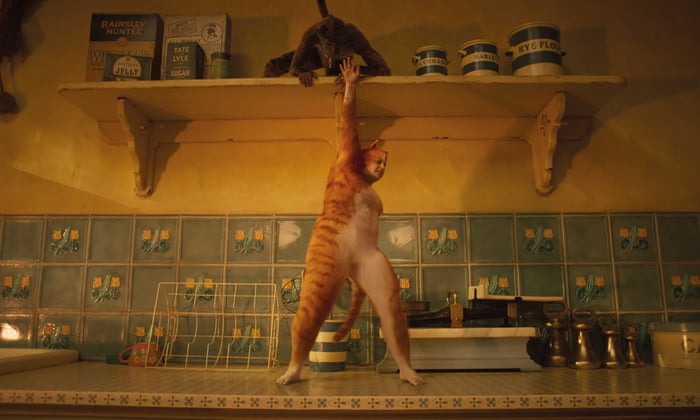
Notes on a Matinee: CATS (2019)

(110m, Color / Directed by Tom Hooper / Screenplay by Tom Hooper, Lee Hall / Music by Andrew Lloyd Webber, Lyrics by T.S. Eliot, "M...